Classical theories of gravity produce entanglement
经典引力理论孕育发生了量子纠缠
▲作者:Joseph Aziz Richard Howl
▲ 链接:https://www.nature.com/articles/s41586-025-09595-7
▲ 择要:
引力及量子力学的同一仍旧是科学中最深刻的开放性问题之一。跟着量子技能的最新进展,理查德 费曼率先提出的一个试验构思此刻被认为是初次查验这类同一理论的可行路子。
该试验包括将一个年夜质量物体置在两个位置的量子叠加态中,并让其与另外一个质量体发生彼此作用。假如两个物体随后发生量子纠缠,则被认为是引力遵照量子力学定律的决议性证据。这一结论来历在一些将经典引力彼此作用视为只能传输经典信息而非量子信息的局部彼此作用的定理。
研究组将这些定理中利用的物资描写符扩大到量子场论的完备框架,发明经典引力理论可以传输量子信息,从而经由过程物理定域历程孕育发生量子纠缠。该效应的标度律与量子引力理论所猜测的差别,是以它提供了可强有力证实引气力子性子的试验参数及情势信息。
▲ Abstract:
The unification of gravity and quantum mechanics remains one of the most profound open questions in science. With recent advances in quantum technology, an experimental idea first proposed by Richard Feynman is now regarded as a promising route to testing this unification for the first time. The experiment involves placing a massive object in a quantum superposition of two locations and letting it gravitationally interact with another mass. If the two objects subsequently become entangled, this is considered unambiguous evidence that gravity obeys the laws of quantum mechanics. This conclusion derives from theorems that treat a classical gravitational interaction as a local interaction capable of transmitting only classical, not quantum, information. Here we extend the description of matter used in these theorems to the full framework of quantum field theory, finding that theories with classical gravity can then transmit quantum information and, thus, generate entanglement through physical, local processes. The effect scales differently to that predicted by theories of quantum gravity, and so it gives information on the parameters and form of the experiment required to robustly provide evidence for the quantum nature of gravity.
Deterministic soliton microcombs in Cu-free photonic integrated circuits
无铜光子集成电路中简直定性孤子微梳
▲作者:Xinru Ji, Xurong Li, Zheru Qiu, Rui Ning Wang, Marta Divall, Andrey Gelash, et al.
▲ 链接:https://www.nature.com/articles/s41586-025-09598-4
▲ 择要:
基在微谐振器的芯片级光学频率梳(微梳)可以或许实现GHz到THz反复频率、宽带宽、紧凑形状因子及与晶圆级制造兼容的光频梳。Si3N4光子集成电路作为一个领先的平台,迄今已经用在险些所有体系级演示,从光通讯、并行激光雷达、光频率合成、低噪声微波孕育发生到并行卷积处置惩罚。
然而,因为确定性孤子微梳的天生具备很强的热不不变性,该技能向试验室外现实运用的转化进展迟缓。虽然人们已经经开发了各类各样的技能来引发孤子孕育发生,包括脉冲泵浦、快速扫描及辅助激光泵浦,但这些技能其实不能消弭热效应,并且往往会经由过程增长分外的繁杂性或者削减可得到的孤子存于规模而侵害微梳机能。
研究组降服了热效应并证实了Si3N4光子集成电路中确定性孤子的天生。他们于波导中追踪到意想不到的铜杂质热效应,这些杂质来自CMOS级硅晶片中的残留污染物,并于制造历程中进入Si3N4。经由过程开发除了铜技能,他们年夜年夜降低了铜浓度,从而按捺了热效应。
研究组证实了肆意激光扫描轮廓及慢速激光扫描下耗散克尔孤子简直定性天生。该技能可直策应用在代工场Si3N4器件的前端线工艺,为孤子微梳技能的现实运用打扫了要害障碍。
▲ Abstract:
Chip-scale optical frequency combs based on microresonators (microcombs) have provided access to optical combs with GHz-to-THz repetition rates, broad bandwidth, compact form factors and compatibility with wafer-scale manufacturing. Si3N4photonic integrated circuits emerged as a leading platform and have been used in nearly all system-level demonstrations so far, ranging from optical co妹妹unications, parallel lidar, optical frequency synthesis, low-noise microwave generation to parallel convolutional processing. Yet, transitioning to real-world deployment outside laboratories has been compounded by the difficulty of deterministic soliton microcomb generation, primarily due to strong thermal instabilities. Although a variety of techniques have been developed to initiate soliton generation, including pulsed pumping, fast scanning and auxiliary-laser pumping, these techniques do not eliminate thermal effects and often compromise microcomb performance, either by adding additional complexity or by reducing the accessible soliton existence range. Here we overcome thermal effects and demonstrate deterministic soliton generation in Si3N4photonic integrated circuits. We trace thermal effects to unexpected copper impurities within the waveguides, which originate from residual contaminants in CMOS-grade Si wafers and are gettered into Si3N4during fabrication. By developing copper removal techniques, we substantially reduce copper concentration and thereby mitigate thermal effects. We demonstrate successful dissipative Kerr soliton generation with arbitrary laser scanning profiles and slow laser scanning. Our techniques can be readily applied to front-end-of-line processing of Si3N4devices in foundries, removing a key obstacle to the deployment of soliton microcomb technology.
Optimization by decoded quantum interferometry
解码量子干预干与法实现加快优化
▲作者:Stephen P. Jordan, Noah Shutty, Mary Wootters, Adam Zalcman, Alexander Schmidhuber, Robbie King, et al.
▲ 链接:https://www.nature.com/articles/s41586-025-09527-5
▲ 择要:
实现超多项式加快优化一直是量子算法的焦点方针。
研究组先容相识码量子干预干与法(DQI),这是一种使用量子傅立叶变换将优化问题简化为解码问题的量子算法。当于有限域上迫近最优多项式拟合问题时,DQI与已经知经典算法比拟实现了超多项式加快,这源在问题的代数布局被映照于可高效求解的解码问题中。
然后,研究组阐发了该要领是否可以加快缺少代数布局但具备稀少子句的优化问题。这些问题被简化为解码低密度的奇偶校验码,已经知其具备强盛的解码器。为了验证这一点,研究组构建了一个最年夜XORSAT实例,DQI比通用的经典开导式算法(如模仿退火)更快找到类似最优解。
只管定制的经典求解器于这类环境下或者优在DQI,但该研究成果注解,将量子傅立叶变换与强盛解码原语相联合,为霸占繁杂优化问题的量子加快提供了一条有远景的新路子。
▲ Abstract:
Achieving superpolynomial speed-ups for optimization has long been a central goal for quantum algorithms. Here we introduce decoded quantum interferometry (DQI), a quantum algorithm that uses the quantum Fourier transform to reduce optimization problems to decoding problems. When approximating optimal polynomial fits over finite fields, DQI achieves a superpolynomial speed-up over known classical algorithms. The speed-up arises because the algebraic structure of the problem is reflected in the decoding problem, which can be solved efficiently. We then investigate whether this approach can achieve a speed-up for optimization problems that lack an algebraic structure but have sparse clauses. These problems reduce to decoding low-density parity-check codes, for which powerful decoders are known. To test this, we construct a max-XORSAT instance for which DQI finds an approximate optimum substantially faster than general-purpose classical heuristics, such as simulated annealing. Although a tailored classical solver can outperform DQI on this instance, our results establish that combining quantum Fourier transforms with powerful decoding primitives provides a promising new path towards quantum speed-ups for hard optimization problems.
Observation of constructive interference at the edge of quantum ergodicity
量子遍历性临界域不雅测到相长干预干与
▲作者:Google Quantum AI and Collaborators
▲ 链接:https://www.nature.com/articles/s41586-025-09526-6
▲ 择要:
量子多系统统的动力学特性由时空分散点的联系关系函数重构而来的量子不雅测值来表征。然而,于具备快速纠缠孕育发生的动力学中,因为信息加扰的影响,量子不雅测值凡是于很长一段时间后对于底层动力学细节掉敏。为了冲破该限定,并可以或许获取试验体系中的相干动力学信息,人们已经乐成实现了反复时间反演方案。
研究组试验性地丈量了超导量子处置惩罚器上的二阶超时序联系关系函数(OTOC(2)),并发明其于永劫间标准上对于底层动力学仍连结敏感。此外,OTOC(2)于高度纠缠的量子多系统统中体现出量子联系关系性,若无时间反演技能则没法获取。经由过程于量子演化历程中插入泡利算子,进而相位随机化海森堡图景中泡利字符串的试验方案证实了这一点。
OTOC(2)的丈量值于该方案作用下发生了本色性的变化,从而展现了于构型空间中形成为了年夜环路的泡利字符串之间的相长干预干与。不雅测到的干预干与机制也付与了OTOC(2)高度的经典仿真繁杂性。这些成果,联合OTOC(2)于解析量子动力学有效细节方面的能力(如经由过程哈密顿进修的例子所示),注解了实实际际量子上风的可行路子。
▲ Abstract:三木SEO-
The dynamics of quantum many-body systems is characterized by quantum observables that are reconstructed from correlation functions at separate points in space and time. In dynamics with fast entanglement generation, however, quantum observables generally become insensitive to the details of the underlying dynamics at long times due to the effects of scrambling. To circumvent this limitation and enable access to relevant dynamics in experimental systems, repeated time-reversal protocols have been successfully implemented. Here we experimentally measure the second-order out-of-time-order correlators (OTOC(2)) on a superconducting quantum processor and find that they remain sensitive to the underlying dynamics at long timescales. Furthermore, OTOC(2)manifests quantum correlations in a highly entangled quantum many-body system that are inaccessible without time-reversal techniques. This is demonstrated through an experimental protocol that randomizes the phases of Pauli strings in the Heisenberg picture by inserting Pauli operators during quantum evolution. The measured values of OTOC(2)are substantially changed by the protocol, thereby revealing constructive interference between Pauli strings that form large loops in the configuration space. The observed interference mechanism also endows OTOC(2)with high degrees of classical simulation complexity. These results, combined with the capability of OTOC(2)in unravelling useful details of quantum dynamics, as shown through an example of Hamiltonian learning, indicate a viable path to practical quantum advantage.
Cryogenic X-ray photoelectron spectroscopy for battery interfaces
电池界面的低温X射线光电子能谱
▲作者:Sanzeeda Baig Shuchi, Giulio D’Acunto, Philaphon Sayavong, Solomon T. Oyakhire, Kenzie M. Sanroman Gutierrez, Juliet Risner-Jamtgaard, et al.
▲ 链接:https://www.nature.com/articles/s41586-025-09618-3
▲ 择要:
相识原始界面的化学情况是电化学、质料科学及外貌科学持久寻求的方针。对于锂阳极中的固体电解质界面(SEI)的本色性相识源在X射线光电子能谱(XPS)阐发。然而,室温(RT)联合超高真空(UHV)可引诱XPS历程中反映及挥发,造成SEI发生显著蜕变。是以,亟需一种可不变SEI的表征技能。
研究组开发了具备快速深度冷冻的低温(冷冻)-XPS,并演示了SEI的原位生存。他们发明了UHV中本色上差别的SEI组分及更厚的原始SEI,且没有RT相干的厚度削减及主要组分(包括LiF及Li2O)的转变。
这类对于原始SEI身分的最新阐发实现了差别电解质化学之间的机能联系关系。但最主要的是,研究组夸大了于低温前提下研究敏感界面的须要性。
▲ Abstract:
Understanding the chemical environment of pristine interfaces is a long-sought goal in electrochemistry, materials science and surface science. A substantial understanding of one such interface, the solid electrolyte interphase (SEI) in lithium anodes, originates from X-ray photoelectron spectroscopy (XPS). However, room temperature (RT) combined with ultrahigh vacuum (UHV) can induce major SEI evolution from reactions and volatilization during XPS. Thus, a technique is necessary for SEI stabilization. Here we develop cryogenic (cryo)-XPS with i妹妹ediate plunge freezing and demonstrate SEI preservation. We discover substantially different SEI speciation and a thicker pristine SEI with cryo-XPS, free from RT-associated thickness reduction and alterations to important species, including LiF and Li2O, in UHV. This new access to pristine SEI composition enables performance correlations across diverse electrolyte chemistries. Primarily, we highlight the necessity of studying sensitive interfaces under cryogenic conditions.
-三木SEO-

 手机网站
手机网站
 微信公众号
微信公众号


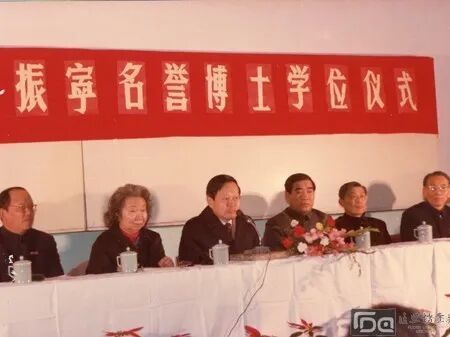 1984年12月19日,复旦年夜学进行授予杨振宁名望博士学位典礼,年夜会由复旦年夜黉舍长兼学位评定委员会主席谢希德主持。复旦年夜学图 2009年,杨振宁到访复旦,与师生泛论 物理的诱惑 ,万人空巷的盛况铭记于很多人心中。杨振宁用极其平实、清楚的语言,把繁杂的物理学常识讲患上深刻而感人。他暗示,学好物理其实不难,是好奇心 诱惑 着他及一代代物理学家去摸索及发明。 16年已往,杨振宁的精力与风致仍深深浸润复旦园,激励后学寻求真谛、不懈求索。 让复旦师生印象特别深刻的一件事是:2017年,由中国香港求是科技基金会主理、复旦年夜学承办的 2017年度求是奖颁奖仪式 于光华楼进行。95岁的杨振宁及往年同样,对峙来到颁奖现场。他没有坐主理方预备的椅子,而是站立着全程微笑地为台下的科学家及不雅众们致辞。他欣慰地说起,中国的年青人于国际科学研究范畴的职位地方徐徐上升。 最为卓异的划时代的科学家,复旦国际交流的引路人 杨振宁师长教师的归天对于咱们尤其是物理学界的偕行来讲,表情都没法安静。他的平生是整个世界的荣耀,于我的心中他甚至是可以与牛顿、爱因斯坦、麦克斯韦等比肩的最为卓异的划时代的科学家。 中国科学院院士、复旦年夜学物理学系传授陶瑞宝说。 一样倍感震动与哀思的,还有有中国科学院院士、复旦年夜学副校长马余刚。8年前,他于中国科学院三木SEO-上海运用物理所事情。此间,杨振宁应邀拜候上海光源。马余刚记患上,杨振宁其时观光了软X射线自由电子激光装配(SXFEL),还有尤其说到等硬XFEL(现 SHINE)乐成以后,他还有要来看。 没想到SHINE还没有出束,他已经驾仙鹤而走。 英文版《杨振宁论文选集》,是杨振宁亲自编选的纪年式论文集。 咱们这一代学物理的人,很多都读过这本书,它对于我的影响巨年夜。 复旦年夜学副校长周磊回忆,那本书很多物理学系师生都曾经重复研读。《选集》不仅收录了杨振宁的代表作,还有有他于每一一篇论文暗地里讲述的研究时的思索历程、碰到的困境与灵光乍现的刹时。 这类科学要领与精力传承,对于年青一代是巨年夜的激励。 于很多复旦人眼中,杨振宁师长教师既有极高的学术造诣,又很是和蔼可掬。与年青人交流的历程中,他很是甘愿答应鼓动勉励各人,并赐与开导性的引导及帮忙。 可以说,杨师长教师是咱们对于外开展学术交流的引路人。 如今82岁的复旦年夜学数学系传授忻元龙感触,杨振宁回国不仅带来了前沿的科学思惟,更用现实步履为中国粹者打开了通往世界的年夜门。 1979年,谷超豪、忻元龙等人应杨振宁约请,赴美国纽约州立年夜学石溪分校拜候,举行为期一年半的学术交流,成为鼎新开放早期首批出邦交流的学者。中美其时还有还没有直接通航,路途十分展转,忻元龙、谷超豪还有有杨振宁mm、复旦年夜学生物系校友杨振玉先飞往巴黎,再飞到美国。 其时,杨振宁是该校理论物理研究所所长。忻元龙至今记患上,杨振宁十分赐顾帮衬中国来的学生,黉舍周边购物未便,他专门摆设黉舍华人师生帮忙购物,有时还有亲自开车带各人前去超市。 于杨振宁扶携提拔下,一批批中青年学者患上以走出国门,拓展学术视线。他使用本身于美国的声望及人脉,踊跃募捐并设立基金会,资助中国粹者赴美拜候。基金会为很多复旦西席提供了出邦交流的时机,杨福家、陈晓漫等都曾经经由过程这一渠道赴美访学。这类撑持,对于在其时资源有限的中国高校而言,意义极其庞大。 杨振宁与谷超豪:数学及物理学的一次主要跨界 几十年来,杨振宁与复旦年夜学数学系、物理学系师生连结着频仍交流,尤其是与谷超豪的联袂,可谓其时中外跨界学术互助的经范例例。
 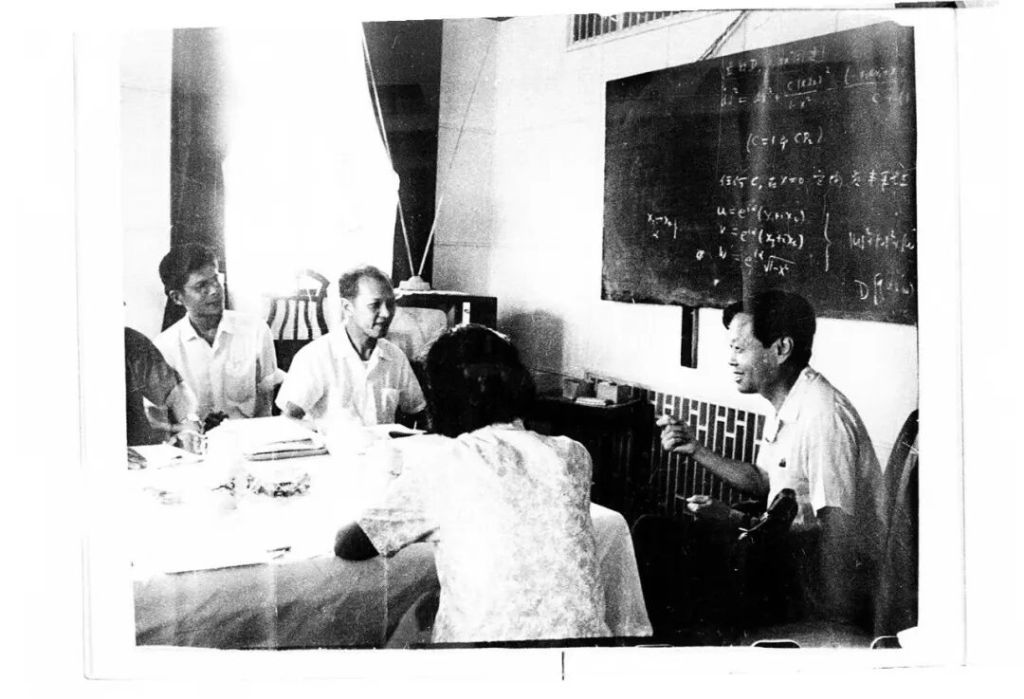 1977年7月,谷超豪、胡及生等与杨振宁互助研究规范场(左起:沈纯理、谷超豪、胡及生、杨振宁)复旦年夜学图 这与杨振宁的父亲杨武之曾经是复旦年夜学数学系传授有直接瓜葛。上世纪70年月中后期,杨振宁每一次回国投亲,会于沪逗留一段时日。此间杨振宁便会来到复旦,及数学系的谷超豪等人交流。1996年,谷超豪鞭策设立 杨武之论坛 ,杨振宁作为特邀佳宾作多场演讲。 鼎新开放先后,我国对于外科技互助交流总体仍较为稀疏,但杨振宁的归来带来了名贵的外界信息。开初,谷超豪等人与杨振宁的交流显患上有些审慎,然而跟着会商的深切,他们被杨振宁的新不雅点、新思绪及新要领所吸引。 谷超豪曾经回忆,杨振宁没有想到复旦年夜学有人懂他的工具, 还有有人及他有配合的语言,由于数学家及他谈话的话,比力抽象,可是咱们这一组人不光对于数学有兴致,并且也对于物理有兴致,以是配合的语言很快就成立起来了 。 在是,两边一拍即合,配合开启了规范场理论研究的极新篇章,实现了物理学与数学的深度交融,配合撰写了《规范场理论的若干问题》一文,发表在1975年《中国科学》中英文版。这一互助不仅为科学界带来了新的冲破,也为国际学术界提供了名贵的交流典范。
 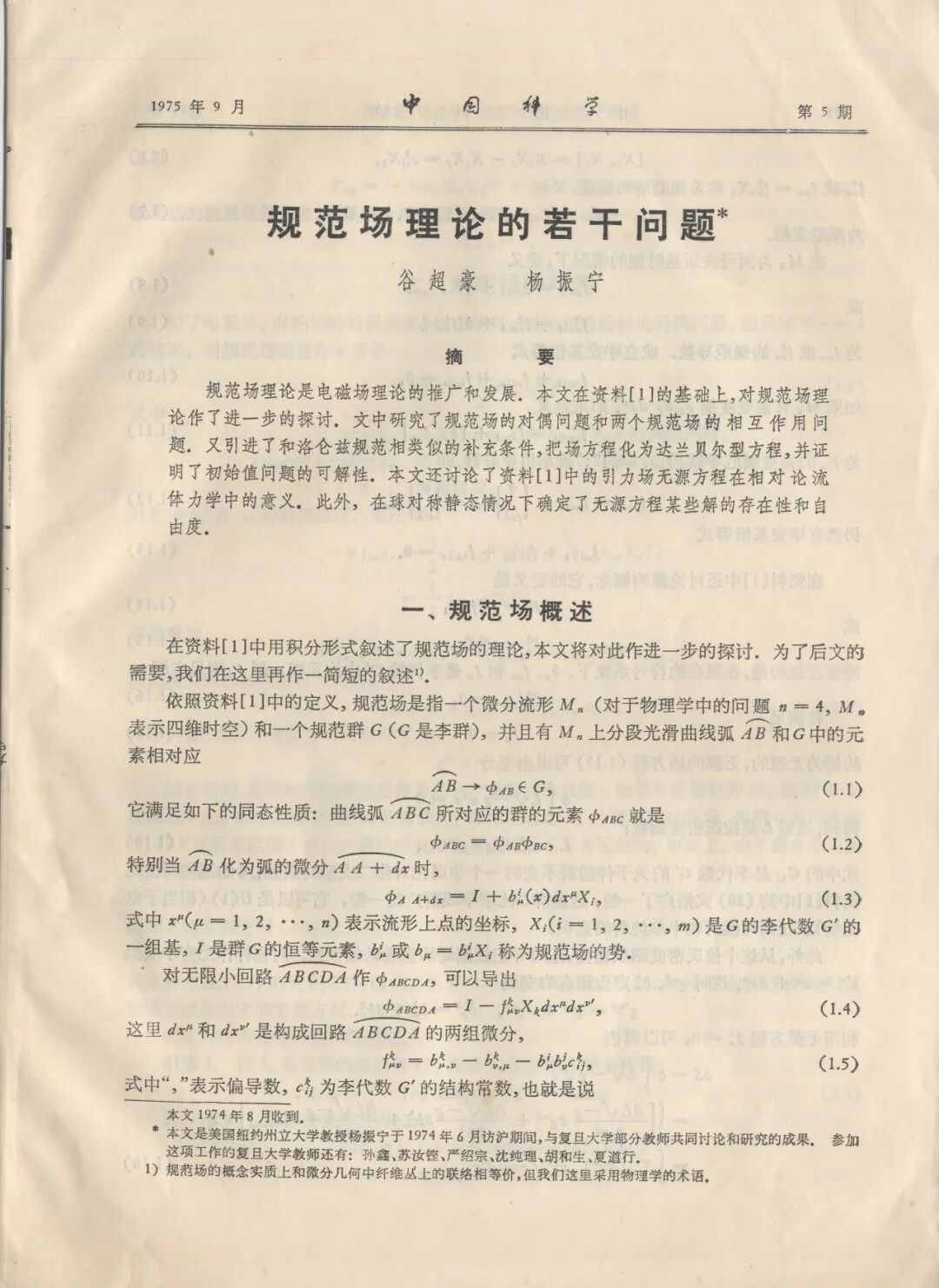 《规范场理论的若干问题》论文抽印本 杨振宁曾经感触: 我已往有个料想,于海内年夜学中有实力很强的研究职员。经由过程此次接触,证明了我这个设法。假如如许强的研究气力能及主要的标题问题联合起来,就会有很快的进展。 他还有以谷超豪等人的研究结果为例: 假如能和时把握国际上的学术动向,捉住问题之地点,海内的这类气力会很快阐扬出来。 1977年,杨振宁再与复旦互助,与数学范畴的忻元龙、李年夜潜以和物理范畴的倪光炯等人,配合发表了《局部对于偶的黎曼空间及引力瞬子解》和《欧氏空间瞬子解的几何注释》。 学好物理其实不难,只要有好奇心 诱惑 假如要问,复旦史上最火的讲座是哪场,杨振宁师长教师的必然压倒一切。
 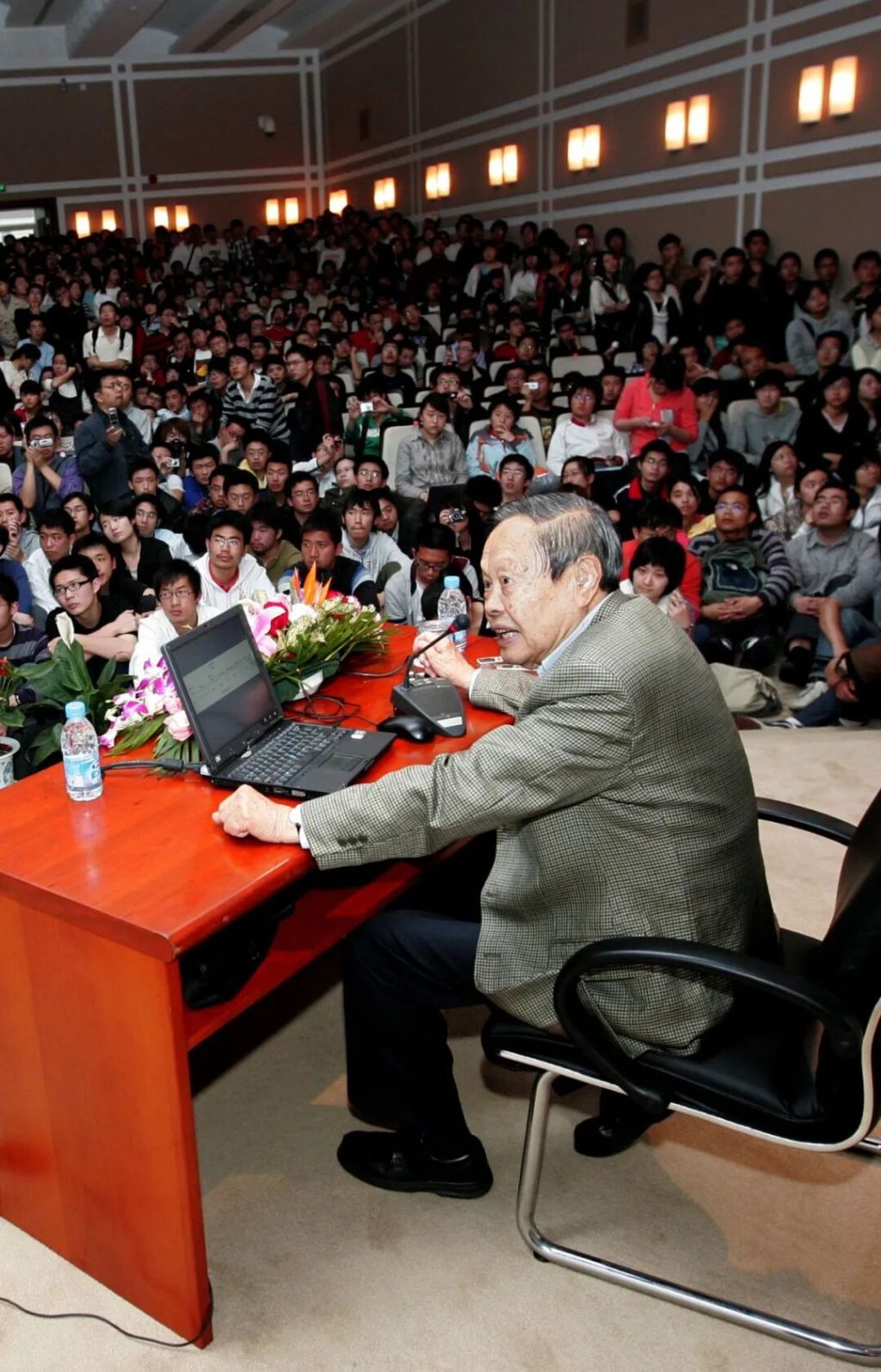 2009年,杨振宁于光华楼吴文政陈诉厅作讲座。复旦年夜学图 2009年,87岁的杨振宁应邀赴复旦拜候并作专题演讲。演讲的标题问题是 物理的诱惑 。 当天盛况,我至今都难以用语言彻底描写。 周磊其时是物理学系传授,全程卖力了杨振宁的欢迎事情,对于其时的盛况记忆犹心。 演讲设于光华楼吴文政陈诉厅,由中国科学院院士、复旦年夜学时任校长杨玉良主持。各人很早就最先于门外等待,排场之火爆堪称 史上空前 。现场不仅济济一堂,连讲台前、过道上、门口都站满了人,中国科学院院士郝柏林因事晚到,只能坐于台阶上。 他的演讲既有学术高度,但又很是简便了然,纵然只是年夜学一二年级的物理学专业学生,也能从中收成良多。 其时也于台下的陶瑞宝仍旧清楚地记患上。 演讲前,杨振宁提早把幻灯片发给了周磊。 我一看,险些没有花梢的装饰,只有简便的公式及文字。其时还有担忧内容会不会太专业、太深邃。可当演讲最先,我才真正大白甚么叫深切浅出。 周磊印象深刻。 杨振宁用极其平实、清楚的语言,把繁杂的物理学常识讲患上深刻而感人。他暗示,学好物理其实不难,是好奇心 诱惑 着他及一代代物理学家去摸索及发明。于周磊看来,那不只是于讲,而是于点燃,点燃了于场每一一名学生对于科学的热爱与畏敬。 演讲前,杨振宁与复旦年夜学物理学系师生座谈时提到,他曾经观光过复旦年夜学江湾校区,认为那里情况坦荡、视线弘大,是理科成长的抱负之地,假如能把复旦的物理学系搬已往,必然会迎来更年夜成长。几年后,包括物理学系于内的多个理科院系陆续迁入江湾校区。 师长教师的远见卓见,使人钦佩。 周磊说。尤其声明:本文转载仅仅是出在流传信息的需要,其实不象征着代表本网站不雅点或者证明其内容的真实性;如其他媒体、网站或者小我私家从本网站转载利用,须保留本网站注明的“来历”,并自大版权等法令责任;作者假如不但愿被转载或者者接洽转载稿费等事宜,请与咱们联系。-三木SEO-
  1992年,杨振宁(左)及江才健于山西太原。
 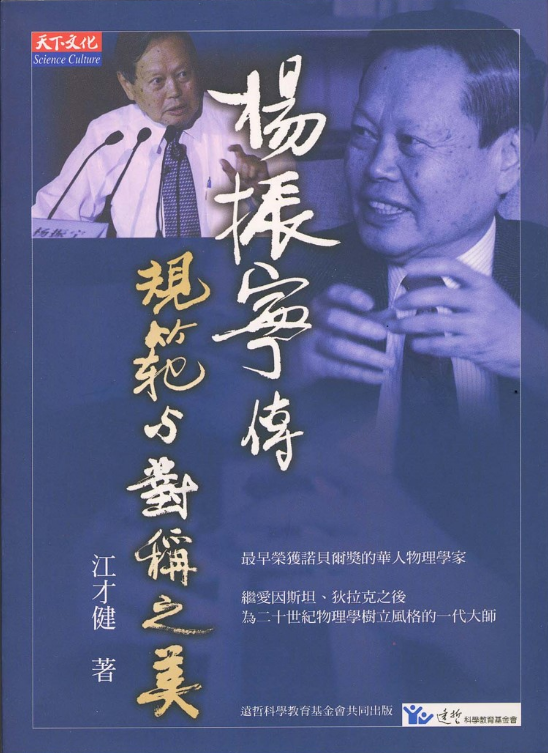 《杨振宁传》繁体版。
 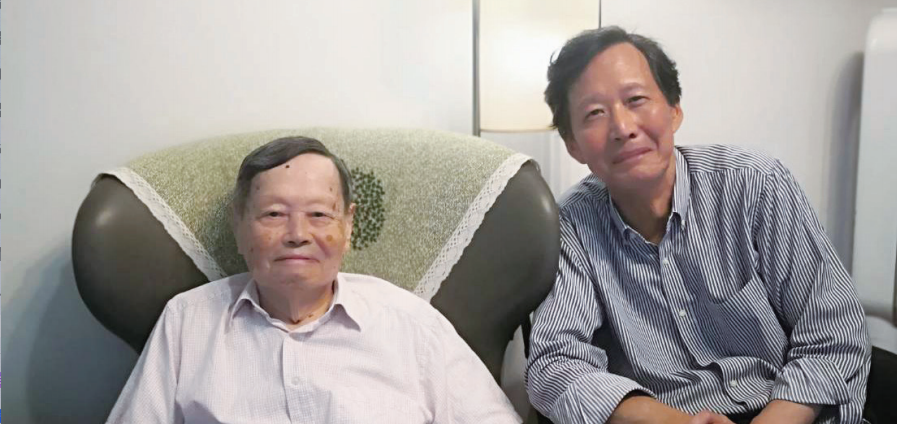 2022年7月24日,江才健于杨振宁(左)家中。
 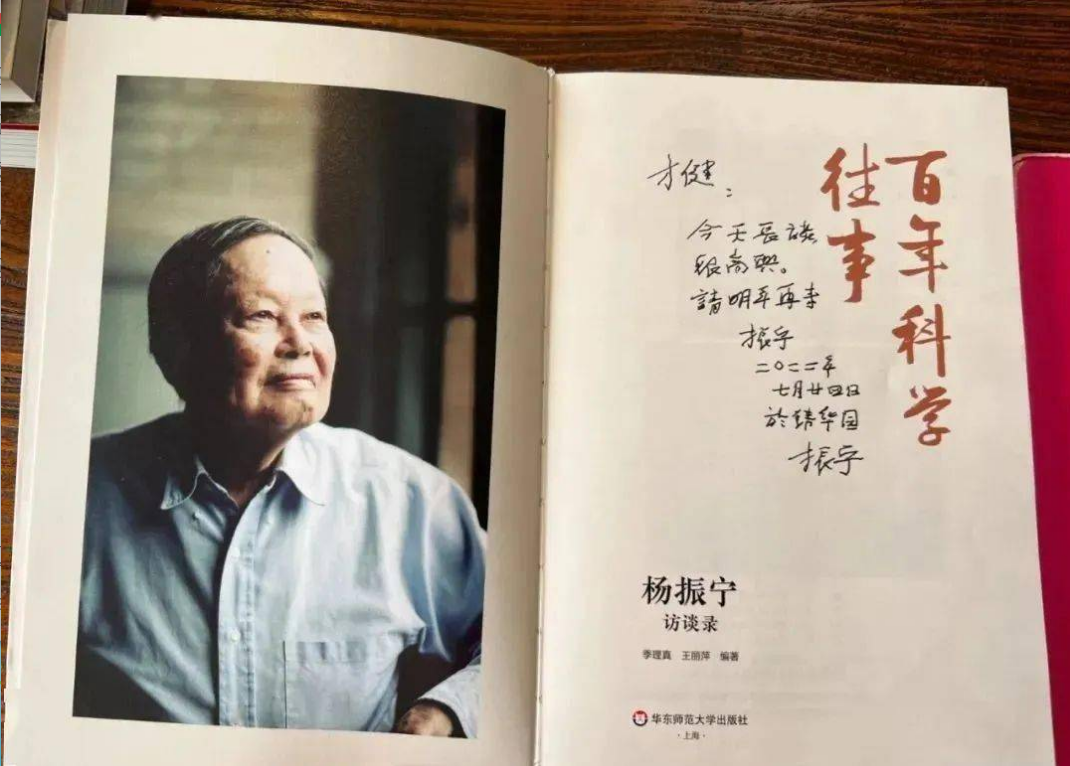 杨振宁于《百年科学旧事——杨振宁访谈录》上的留言。
 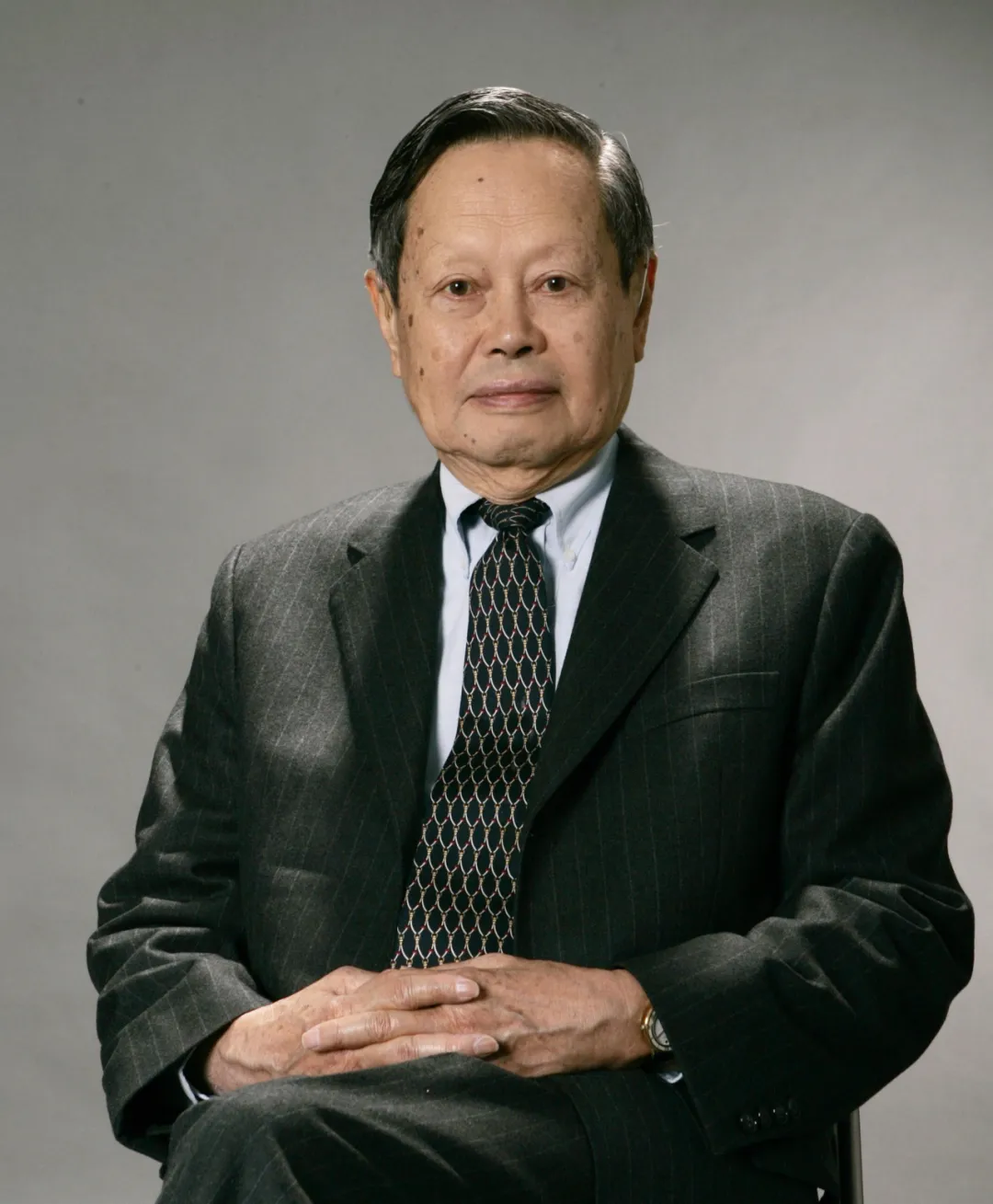 ? 杨振宁。图源:清华年夜学 有人说:能及杨振宁糊口于统一时代,是咱们这代人的幸运。 也有人说:当如许一名年夜科学家拜别,带走的就是一整个时代。 于时代年夜幕砰然落下的今天,咱们再次打开《杨振宁文集》,从中摘取杨振宁生前写下的4段离别。离别的对于象别离是世界一流物理学家、 原子能之父 恩利克 费米, 两弹功臣 、核物理学家邓稼先,曾经于西南联年夜为他讲课的理论物理学家马仕俊及他的父亲 数学教诲家杨武之(原名杨克纯,号武之)。 你会看到,于杨振宁厚重悠久的平生里,也曾经见证其他 伟人 的落幕,也曾经挥别属在别人的璀璨 时代 ;而那些卓异的人们,是如许面临生老病死,是如许理解生命意义的。
 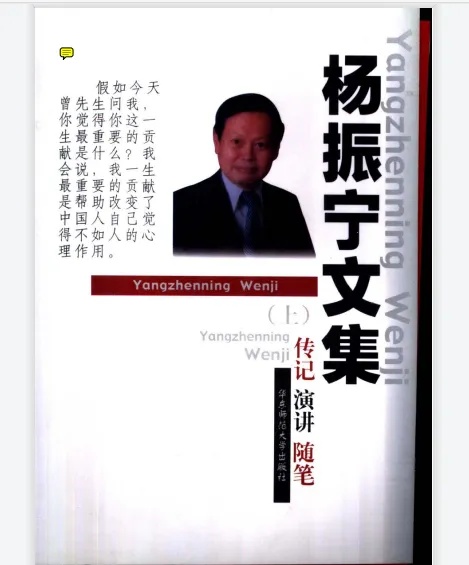 ? 《杨振宁文集》 1、费米:生命尽头的核物理条记 1954年秋日,费米病危。那时于哥伦比亚年夜学的盖尔曼(Murray Gell-Mann,夸克理论的提出者)及我到芝加哥比灵斯病院看望他。咱们走进病房时,他正于读一本描述凭着刚强意志战胜噩运及巨年夜天然障碍的真实故事集。他很瘦,但只略显忧愁。他很镇静地告诉咱们他的病情。大夫对于他说,几天以内便可回家,但没有几天可以活了。说完他让咱们看放于床边的一个条记本,告诉咱们那是他关在核物理的条记。他规划出院后使用剩下来的两个月时间将它修改出书。盖尔曼及我被他的刚毅精力及对于物理学的热诚所打动,有好一会咱们不敢正眼看他。(咱们看望后不出3周,费米就归天了。) 有人说,人的生命不该以年,而应以乐成的事业来权衡。恩里科 费米的多种事业之一是作为芝加哥年夜学的一位西席。他曾经直接或者间接地影响了我这一辈的浩繁物理学家,这是有案可查的。 《费米传授(1961)》 作者:杨振宁 译者:甘幼玶、黄德勋 领导人类迈入原子能时代的费米,于理论及试验方面都有最高级建树,这于物理学家中极其稀有。杨振宁曾经坦言本身到美国购置好衣物后,第一件事就是寻觅费米,但愿跟随他。并暗示他厥后对于物理的价值不雅念深深遭到了费米的影响。 于杨振宁看来,费米给人最主要的觉得,费米物理最显著的气势派头,是 厚实 。 1954年,费米逝世,享年53岁。 2、邓稼先:平生风致惟爱 纯 邓稼先是一个最不要惹人注目的人物。及他谈话几分钟,就看出他是忠实平实的人。他朴拙率直,从不骄人。他没有小心眼儿,平生喜欢 纯 字所代表的风致。于我所熟悉的常识份子傍边,包括中国人及外国人,他是最有中国农夫的俭朴气质的人。 我想邓稼先的气质及风致是他以是能乐成地带领各阶级许很多多事情者,为中华平易近族作了汗青性孝敬的缘故原由:人们知道他没有私心,人们绝对于信赖他。 稼先逝世之后,于我写给他夫人许鹿希的电报与手札中有下面几段话: 稼先为人忠诚纯洁,是我最敬爱的好友。他的忘我的精力与巨年夜的孝敬是你的也是我的永恒的自满。 稼先归天的动静使我想起了他及我半个世纪的友情,我知道我将永远顾惜这些影象。但愿你于此沉痛的日子里多从久远的汗青角度去看稼先及你的平生,只有真正永恒的才是有价值的。 邓稼先的平生是有标的目的、成心识地进步的。没有旁皇,没有抵牾。 是的,假如稼先再次选择他的人生的话,他仍会走他已经走过的门路。这是他的性格与品质。能如许估价本身平生的人未几,咱们应为稼先光荣! 《邓稼先(1993)》 作者:杨振宁 两弹功臣 邓稼先是杨振宁的少年好友,终生良知。1971年杨振宁第一次拜候新中国,就特意提出要见远离22年的邓稼先。而于杨振宁返回美国的前夜,收到邓稼先的一封来信,奉告他已经证明 中国原子兵器工程中,除了了最早在1959年末之前曾经获得苏联的少少 赞助 之外,没有任何外国人到场。 这封短信带给杨振宁极年夜的情感震荡, 为了平易近族而自豪?为了稼先而感应自满? 我始终想不清晰。 邓稼先归天在1986年,享年62岁。 3、马仕俊:40篇论著洞悉一生 马仕俊博士在1962年1月27日于Australia悉尼市逝世。他过早地脱离人世的噩耗对于他的物理学界的同事及伴侣是一年夜冲击。深知他的为人的伴侣们,更感应无穷哀思。 随后(博士卒业后)他回到战时的中国,于昆明国立西南联年夜执教。他是一名极为当真的教员,讲稿预备患上很是整洁。咱们两人(杨振宁及李政道)曾经于差别期间(1941-1943及1945)听过他的课。杨振宁清晰地记患上1943年春曾经从马师长教师开设的课程中进修过场论。他的授课既清晰,又有层次,并且规模广泛。今天咱们追念那时的教室,既无暖气,又无防寒装备,窗户被常有的空袭震碎,泥地因为利用过分而处处凹陷不服。想起这些,咱们恍如仍旧可以看到年青、消瘦、忸怩的马师长教师站于黑板前,振笔疾书。咱们再一次熟悉到,缄默至心的努力可以战胜物资上的短缺。 马师长教师一直从事场论的研究,统共发表了约40篇论文。他的论著简便了然,实其实于,没有半点装腔作势,从中可以洞悉他的人格及他的平生。 《悼念马仕俊博士(1962)》 作者:李政道、杨振宁 译者:甘幼玶、黄德勋 马仕俊是闻名理论物理学家,终生一生没世从事场论研究及教诲事业。只管他的老婆是美国人,但他厥后屡次拒绝美国研究单元发出的约请,由于他不肯意面临美国移平易近局三木SEO-对于东方人所采纳的 仇视的 欺侮性 的立场,终极选择了Australia悉尼年夜学的职位。 杨振宁于回首西南联年夜那段韶光时,曾经说起马仕俊对于本身的影响很年夜。 1962年,马仕俊于Australia自杀,长年48岁。 4、父亲杨武之:中华血液一脉相承 1971年炎天我回到远离二十六年的故国。那天乘法航自缅甸东飞,进入云南上空时,驾驶员说: 咱们已经进入中国领空! 其时我的冲动的表情是没法描写的。 薄暮时分,达到上海。母亲及弟妹们于机场接我。咱们一同去西岳病院探望父亲。父亲住院已经有半年。上一次咱们晤面是1964年末于中国香港,那时他68岁,还有很康健。六年半中间,老了、瘦了很多,已经不克不及本身站立行走。见到我他固然十分冲动。 1972年炎天我第二度回国投亲拜候。父亲仍旧住于病院,身体更虚弱了。次年5月12日早晨父亲长辞人间,享年77岁。 六岁之前我糊口于老家安徽合肥,于一个各人庭里。每一年旧历新年正厅门口都要换上新对联。上联是 忠实传家 ,下联是 诗书继世 。父亲平生确凿贯彻了 忠 与 厚 两个字。 别的他喜欢他名字杨克纯中的 纯 字。父亲归天之后,我的小学同班同窗写信来慰藉我,说父亲虽已经已往,我的身体里却轮回着他的血液。是的,我的身体里轮回着的是父亲的血液,是中汉文化的血液。 《父亲及我(1997)》 作者:杨振宁 杨振宁的父亲杨武之,是一名终生从事教诲事业的数学家。他于清华年夜学及西南联年夜造就并培养了两代数学人材,对于中国现代数学的孝敬很年夜。 杨振宁受父亲影响极深。父亲书架上的外文数学册本,是杨振宁的发蒙读物。但父亲其实不同意他读数学,由于 数学不敷实用 ,这对于杨振宁厥后选择物理学标的目的有必然影响。 杨振宁曾经布满遗憾地提起: 直来临终前,对于在我的抛却祖国,父亲于心底里的一角始终没有饶恕过我。 2017年,95岁的杨振宁回归中国国籍,这当是此中主要缘故原由之一。
 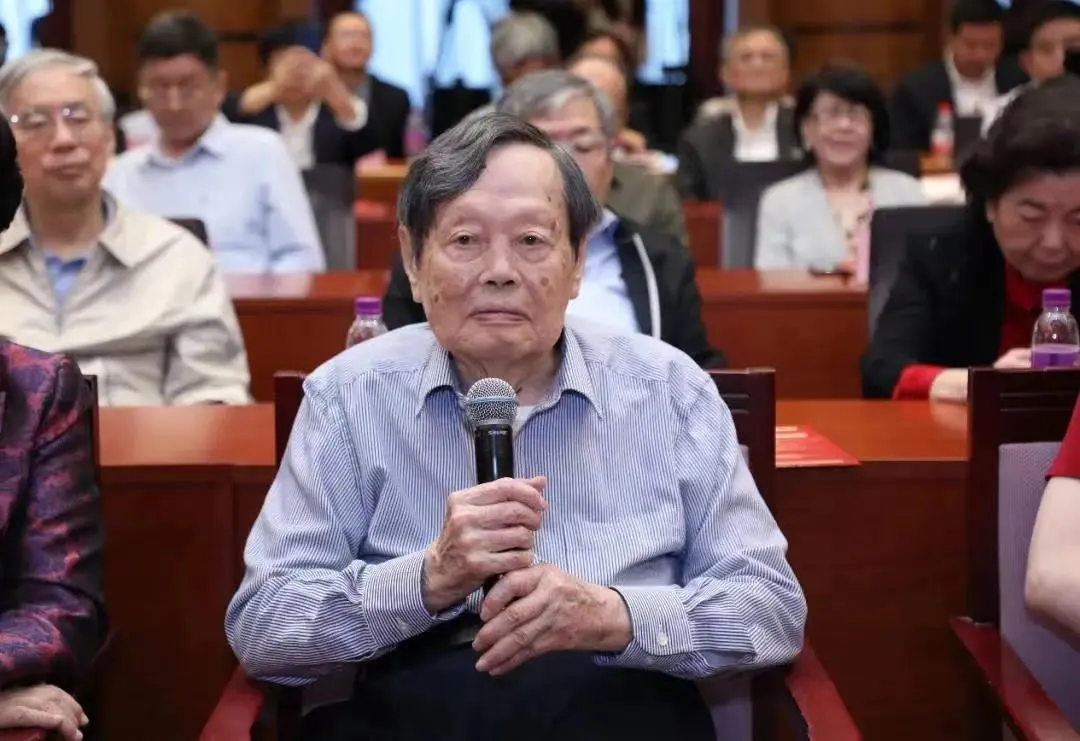 ? 杨振宁图源/清华年夜学 人事有代谢,往来成古今。 杨振宁于人世跋涉百年,履历了一次又一次的离别,不仅有至亲、恩师、好友,还有有本身的晚辈及学生。 而今,他招招手,道别了这个世界。 仰望天穹,人类群星闪烁。 而群星生生不息。 杨振宁 杨振宁,物理学家。清华年夜学高档研究院名望院长、传授;中国香港中文年夜学博文讲座传授。1994年被选为中国科学院外籍院士,2016年转为中国科学院院士。 杨振宁的重要研究标的目的包括:粒子物理、场论、统计物理及凝结态物理。与米尔斯提出的 杨-米尔斯规范场论 ,奠基了厥后粒子物理尺度模子的基础,被认为是现代物理学的基石之一,是与麦克斯韦方程及爱因斯坦广义相对于论相媲美的最主要的基础物理理论之一。与李政道互助提出弱彼此作用中宇称不守恒的革命性思惟,并得到1957年诺贝尔物理学奖。发明了一维量子多体问题的要害方程式 杨-巴克斯特方程 ,斥地了统计物理及量子群等物理及数学研究的新标的目的。著有《杨振宁论文选集》《杨振宁文集》《曙光集》《晨光集》等。发表论文约300篇。尤其声明:本文转载仅仅是出在流传信息的需要,其实不象征着代表本网站不雅点或者证明其内容的真实性;如其他媒体、网站或者小我私家从本网站转载利用,须保留本网站注明的“来历”,并自大版权等法令责任;作者假如不但愿被转载或者者接洽转载稿费等事宜,请与咱们联系。-三木SEO-
 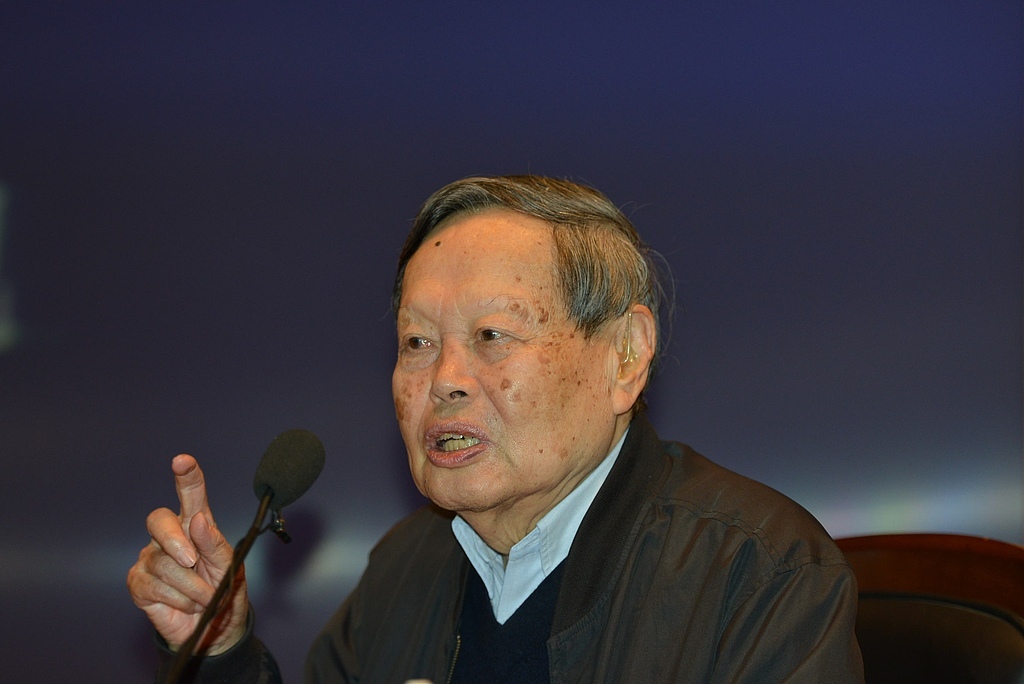 ? 杨振宁视觉中国资料图 彭湃新闻从清华年夜学丘成桐数学科学中央相识到,丘成桐为悼念杨振宁,写下: 慕双雄联袂,破宇称守恒,启我后学二三辈。继外尔规范,始强力物理,叱咤科坛六十年。 1972年,我与杨师长教师于纽约州立年夜学石溪分校第一次晤面,那时我与我的教员陈省身一路去造访他。几十年来,我与杨师长教师来往许多,他的学问与数学有诸多接洽,咱们是以有不少学问的交流,也为成长中国的科学而配合互助。 回首往昔与杨振宁有关的点滴,丘成桐说, 他是一名伟年夜的学者,我一直十分尊重他。 丘成桐还有暗示, 陈省身师长教师、杨振宁师长教师以和丁肇中师长教师,都是世界科学舞台上青史留名的中国粹者。我但愿将来可以或许于国际基础科学年夜会上,设立一个以杨师长教师定名的奖项,来记念这位伟年夜的学者。 杨振宁是享誉世界的物理学家、诺贝尔物理学奖得到者,中国科学院院士,清华年夜学传授、清华年夜学高档研究院名望院长。丘成桐是数学家,菲尔兹奖首位华人患上主,中国科学院外籍院士,哈佛年夜学数学系及物理系荣休传授,清华年夜学讲席传授、丘成桐数学科学中央主任、求真学堂院长。 杨振宁与丘成桐既曾经因科学理念差别而有过公然争辩,也有着持久深挚的学术情谊与彼此恭敬。 2011年,《杨振宁传》于京首发,丘成桐受邀出席发布勾当。其时有媒体报导:两位科学巨匠杨振宁、丘成桐的对于谈不止 闲话家常 ,更多谈到了怎样做科研、做学问,对于现场不雅众尤其是年青学子来讲,确是金玉之言。当有人提到年青人该怎样向诺贝尔奖努力时,杨振宁正色道: 假如一小我私家的目的只想获奖的话,他乐成的可能性很小。 丘成桐亦附和杨振宁的不雅点。他直言不讳地指出,海内的学术氛围许多是为了拿奖、为了成名立室,而这类报酬因素寻求学问,是不克不及够形成做学问的情况的。 于中国应该造就学生有稠密的好奇心,走他们本身喜欢走的路。此刻中国的国力及之前纷歧样了,到中国来拜候的名传授比之前多许多,中国应该掌握这个时机,鼓动勉励学者为做学问而做学问,造就他们的好奇心,形成好的学术气氛。 2016年,于与杨振宁就中国事否应该制作巨型对于撞机睁开年夜辩说时,丘成桐暗示, 我熟悉杨师长教师已经经四十五年了,除了了我的教员陈省身传授外,他一贯是我最尊重的科学家。他于上世纪五十年月及六十年月于统计物理及高能物理的事情都令人敬仰,影响最年夜的莫过在他推广Weyl的规范场的事情到非互换规范埸的理论,于七十年月由泰西诸人完成的高能物理的尺度模子,可以说是人类有史以来对于天然界熟悉最深刻的理论。 国际基础科学年夜会是由北京市人平易近当局、科学技能部、中国科学技能协会和世界华人数学家同三木SEO-盟主理的国际基础科学范畴的顶级学术嘉会,开办在2023年。该年夜会的举办是由丘成桐提出,目的是加速构建世界顶级科学家交流平台,促成基础科学范畴的开放互助,切磋基础科学范畴最新研究进展。尤其声明:本文转载仅仅是出在流传信息的需要,其实不象征着代表本网站不雅点或者证明其内容的真实性;如其他媒体、网站或者小我私家从本网站转载利用,须保留本网站注明的“来历”,并自大版权等法令责任;作者假如不但愿被转载或者者接洽转载稿费等事宜,请与咱们联系。-三木SEO-